FIRE SLEEVE & HEAT SHIELD

Fire Sleeve and Heat Shield Sleeving

Four constructions for harness protection near heat sources: aluminium-foil fibreglass tubing (flat, tight to the bundle), aluminium-foil corrugated fibreglass tubing (corrugation for routing), self-adhesive fire sleeve (retrofit without disconnecting wires), and high-temperature fibreglass fire sleeve without a reflective layer (material-based insulation).

Reflective shieldingSelf-adhesive retrofit260 °C / 300 °C continuous1000 °C surge reference
铝箔玻纤管 / 铝箔波纹管 / 自粘防火套管

Product structures

Four structures by heat source and installation

Aluminium-foil fibreglass tubing (flat)

Aluminium-foil fibreglass tubing (flat)

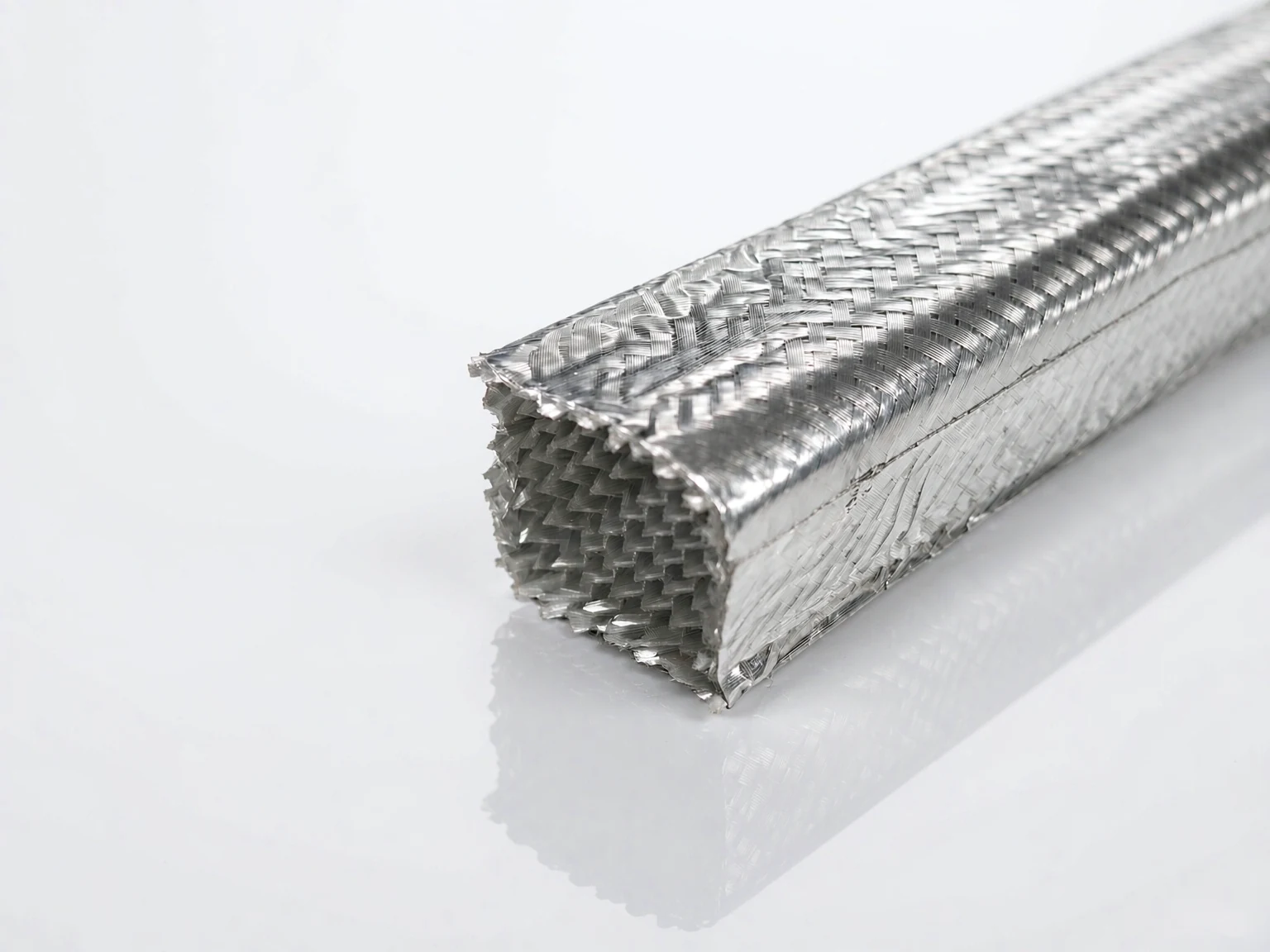
Aluminium foil bonded over a fibreglass substrate, smooth surface. The foil does not provide temperature resistance — it reflects radiant heat back, which is why it performs best directly facing the source. Flat construction sits close to the bundle and suits tight, mostly straight runs.
Aluminium-foil corrugated tubing

Aluminium-foil corrugated tubing

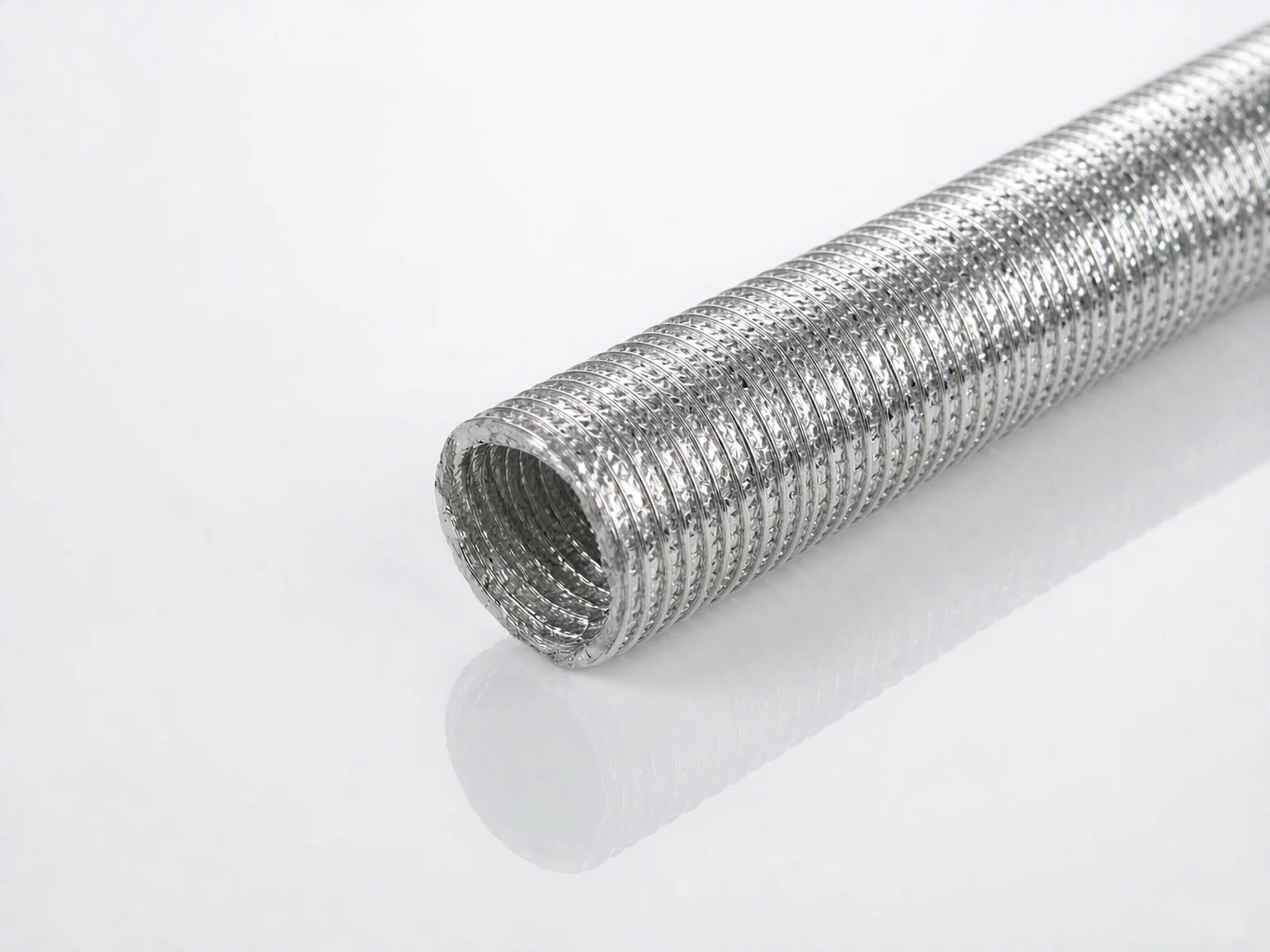
Same foil + fibreglass composite with a corrugated wall. Corrugation prevents creasing when bending and creates an interrupted air gap between wall and harness. The trade-off is a larger OD at the same ID and a slightly higher unit price.

Self-adhesive fire sleeve

Self-adhesive fire sleeve

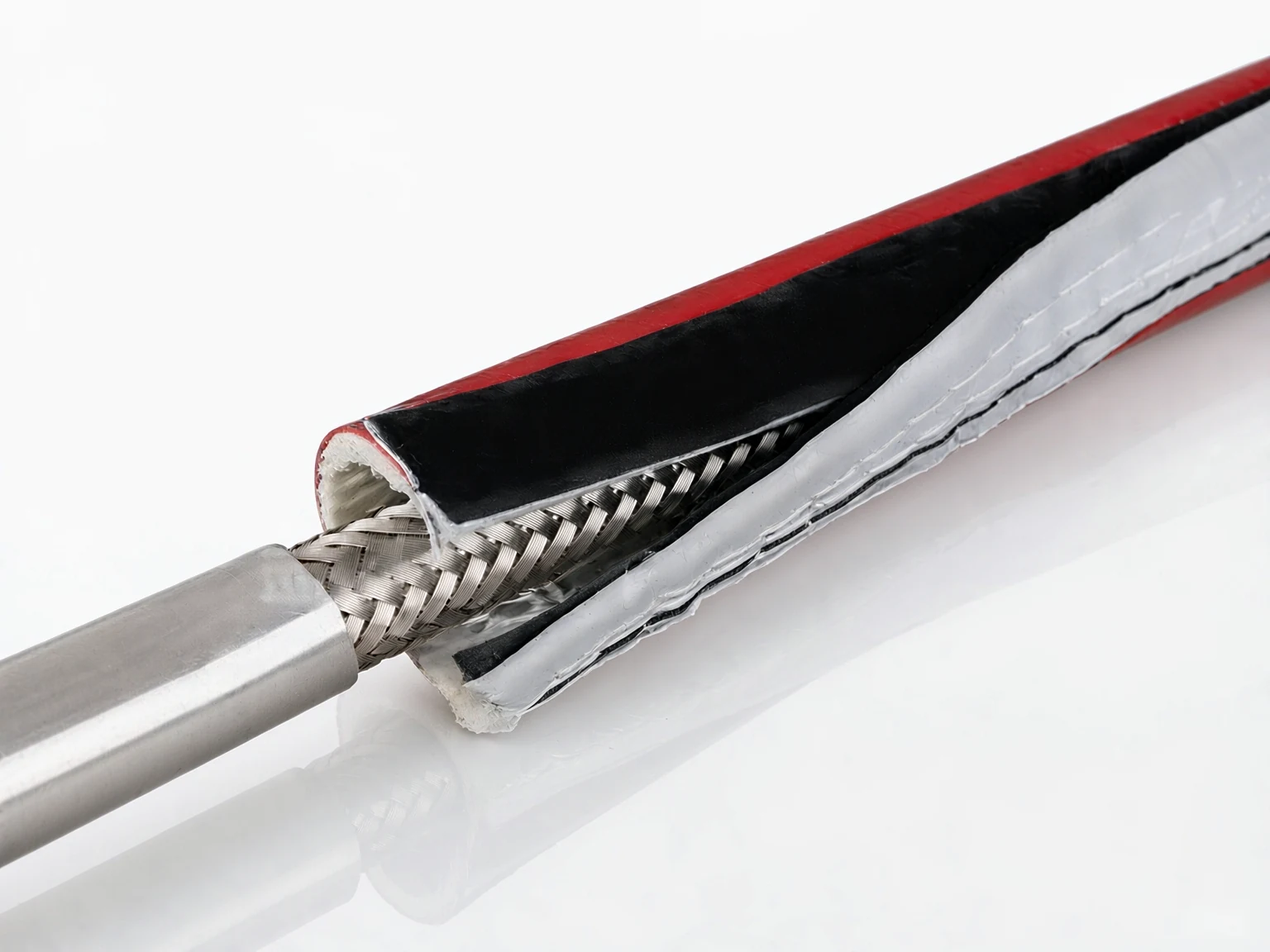
Fibreglass substrate with aluminium-foil reflective layer (some constructions add a silicone coating) and a hook-and-loop closure. Fits without disconnecting wires — for retrofit and service sections. Continuous rating 260 °C or 300 °C depending on construction grade; 1000 °C is a seconds-level flame-impingement reference, not a continuous rating.

High-temperature fibreglass fire sleeve (no reflective layer)

High-temperature fibreglass fire sleeve (no reflective layer)

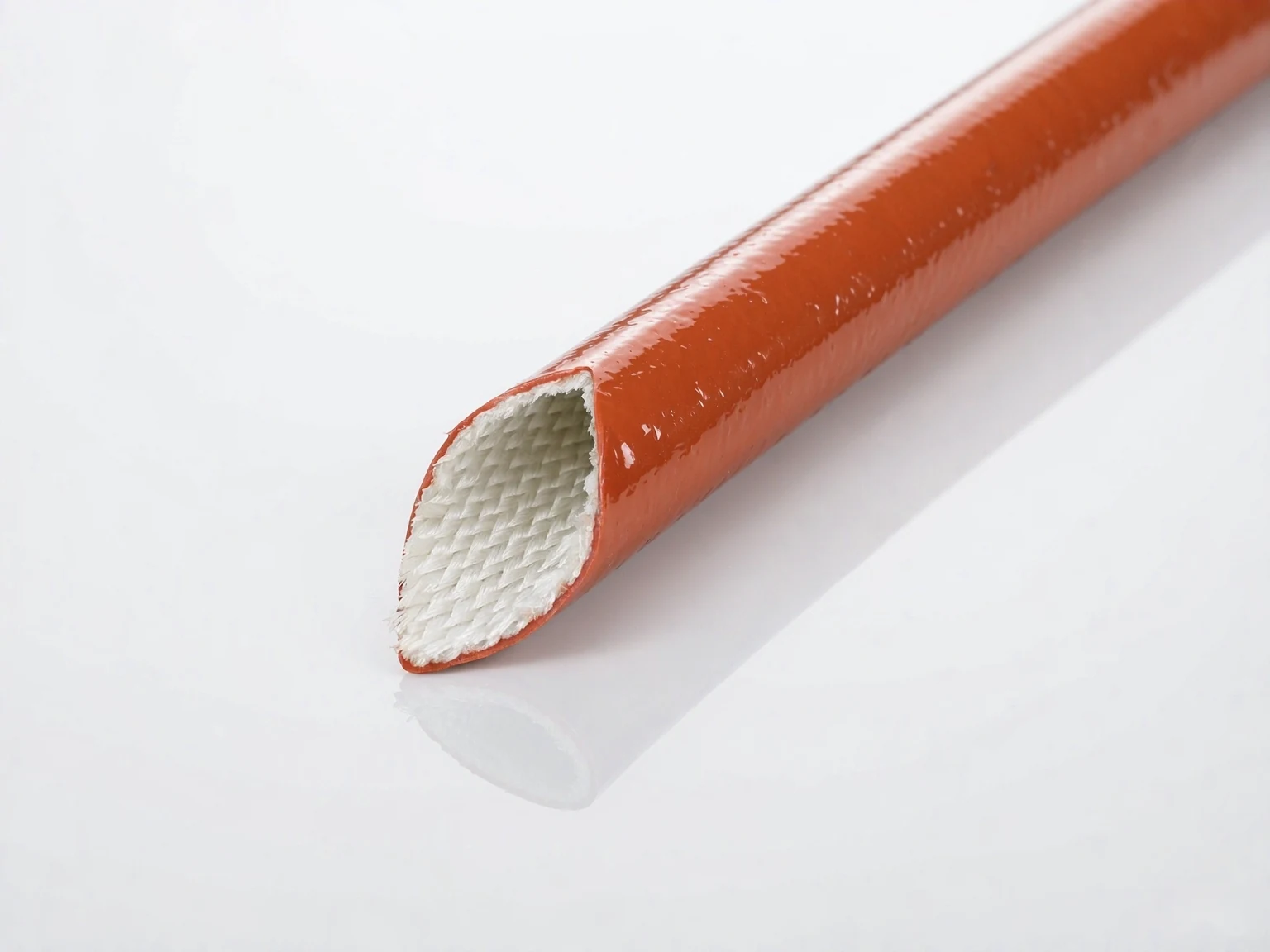
Braided fibreglass without foil. Insulation comes from the material's low conductivity and thickness rather than reflection — appropriate where the sleeve contacts high temperature directly or must survive short flame impingement.

Selection

Six points to confirm before quoting

Insulation performance depends on four things, not just the temperature rating: heat source type, distance to the source, whether the ends are closed, and the presence of oil or coolant. An open-ended sleeve allows hot air into the bore and can run 30%+ hotter internally than a closed section.

Heat sourceRadiant / convective / contact
DistanceGap to source, direct exposure angle
TemperatureContinuous, peak and duration
EnvironmentOil, coolant, mud, salt spray
RoutingBend radius, number of turns
InstallationRetrofit without disconnection, reopenable

Structure comparison

Four constructions at a glance

Temperature values are reference ranges; the selected specification governs.

StructureMechanismTemperature (reference)Bend adaptabilityRetrofitAbrasionTypical position
Foil fibreglass tube (flat)Foil reflection + fibreglassSubstrate-dependentLow (creases)Thread-throughLow (foil wears through)Straight runs facing radiant heat
Foil corrugated tubeReflection + air gapSubstrate-dependentHighThread-throughLowMultiple turns, bend radius below 3× ID
Self-adhesive fire sleeveFoil reflection + fibreglass260 °C / 300 °C continuous; 1000 °C surge referenceMediumHigh (hook-and-loop)MediumEngine bay, retrofit and service sections
Fibreglass fire sleeve (no foil)Low conductivity + thicknessTo 600 °C continuous; higher short-termMediumThread-throughHighDirect high-temperature contact, short flame

The self-adhesive sleeve is available in both 260 °C and 300 °C continuous grades — state the grade required when enquiring.

The 1000 °C figure applies to seconds-level flame impingement and is not a continuous rating; it does not constitute a commitment for every specification.

Wall thickness

Quote ID and wall-thickness grade, not ID alone

The foil composite thickness scales with the wall-thickness grade, not only the ID: larger diameters and heavier walls carry a thicker composite to withstand assembly stress, while fine diameters prioritise conformity. Two sleeves with the same 10 mm ID can behave very differently in insulation and bendability.

Quoting a bare ID therefore compares different products — which is why apparently identical sleeves can differ twofold in price. Specify ID plus wall thickness (or OD) and ask for the wall thickness on the quotation.

Layering

When a single reflective layer is not enough

Where radiation is intense and the sleeve sits close to the source, layer instead of thickening: reflective tubing on the inner run with a fibreglass sleeve over it, using the trapped air gap for additional insulation. Both are standard products, so this needs no special construction or tooling.

Installation pitfalls

Six judgements that cause failures

Reading 1000 °C as a continuous rating

The continuous rating is 260 °C or 300 °C by grade — nearly a factor of four lower. Designing to the surge value ages and delaminates the composite early, usually in the section closest to the source.

Using the foil as a wear surface

The foil is thin; abrasion against brackets removes the reflective layer and insulation drops to zero. Any rubbing position needs a braid or coating outside.

Applying self-adhesive closures onto oily surfaces

Initial tack is highly sensitive to surface cleanliness. Clean and press firmly before installation; add ties where needed.

Leaving the ends open

Open ends let hot air into the bore — the most common reason a shielded harness still exceeds its limit. Wrap in sections and overlap between them.

Over-tightening

Compressing the air gap removes part of the insulation. Keep the sleeve in contact but not stretched; preserve the corrugation.

Bending flat tubing around corners

The foil creases and the crease is where reflection fails first; loose foil fragments can migrate into connectors. Use corrugated tubing or straight sections with elbow transitions.

FAQ

Common purchasing questions

Is a fire sleeve the same as a heat shield?

Not exactly. Fire protection focuses on flame integrity under short impingement; heat shielding focuses on reducing internal temperature rise. The self-adhesive sleeve covers both to a degree; for intense radiation at close distance, layer reflective and fibreglass sleeves rather than thickening one.

Flat or corrugated?

Flat where the run is essentially straight and space is tight — smaller OD, tighter fit, lower unit price. Corrugated where the harness turns or the bend radius falls below roughly 3× the ID.

What is the continuous rating of the self-adhesive sleeve?

260 °C or 300 °C continuous, depending on construction grade; both are produced. The 1000 °C figure is a seconds-level flame-impingement reference and must not be used as a continuous rating.

Why do quotes for the same ID differ twofold?

Because the products differ. Cost is driven by wall-thickness grade, foil composite structure and fibreglass basis weight — none of which appear when only the ID is quoted. Specify ID plus wall thickness or OD, and require the wall thickness on the quotation.

RFQ

Request a quotation

Routing and heat-source conditions settle the construction in one pass:

  • Structure: flat foil / corrugated foil / self-adhesive / fibreglass (no foil)
  • Routing: number of turns, minimum bend radius:
  • Sleeve ID (mm) and bundle diameter:
  • Heat source type and distance:
  • Continuous and peak temperature with duration:
  • Environment (oil / mud / salt spray / abrasion):
  • Retrofit or reopenable requirement:
  • Wrap length and end closure:
  • Sample quantity and annual volume:

Samples and selection

Describe the heat source and routing

Include heat source type and distance, continuous and peak temperature, bend situation, retrofit requirement, ID and wall grade, expected volume.