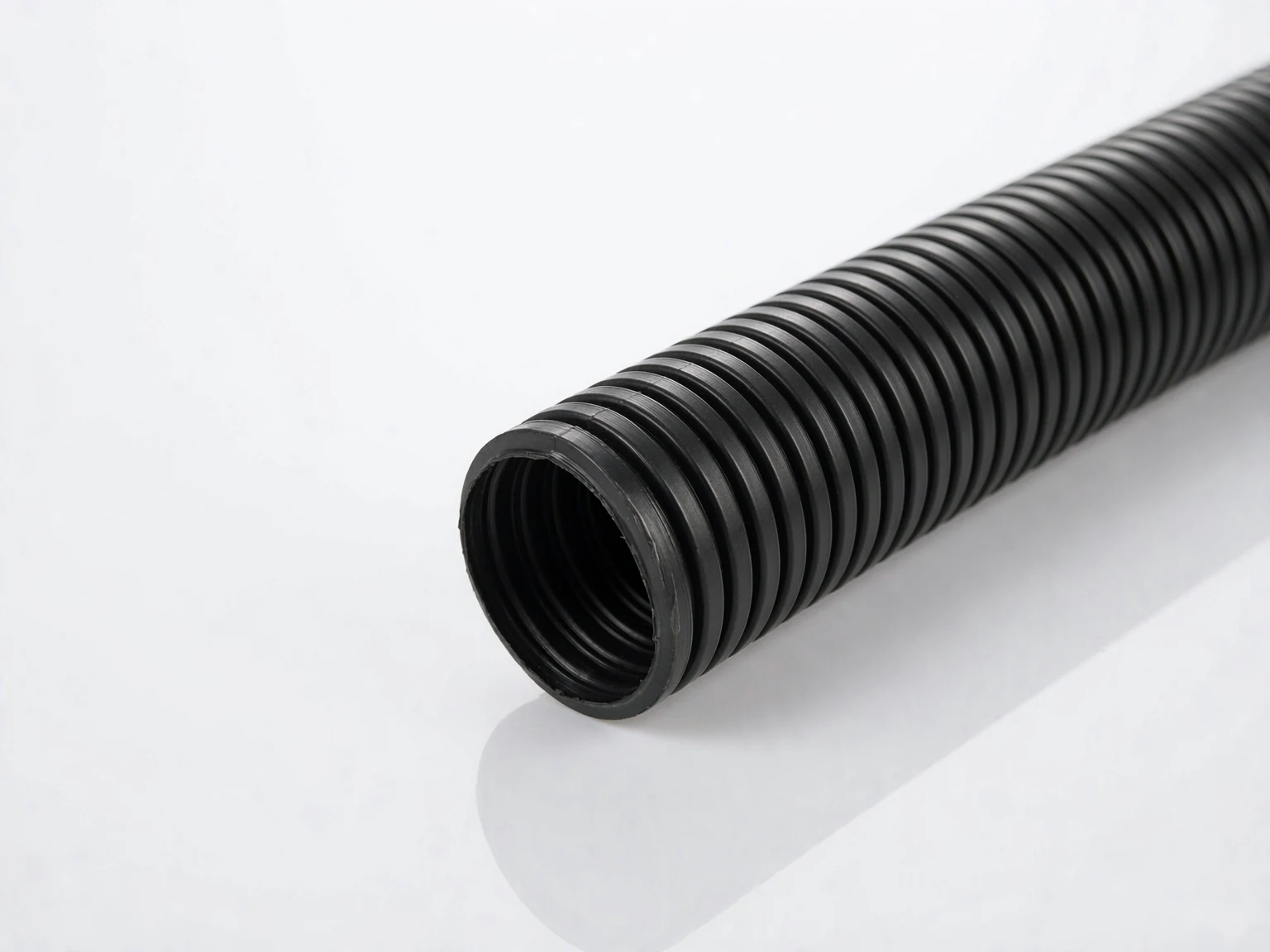
PP corrugated tube (closed)
High-temperature modified polypropylene, cost-oriented, −40 to 125 °C continuous. For cabinets, appliances and general equipment routing. Good flexibility, lower crush resistance than PA.
CORRUGATED TUBE
Corrugated extruded tubing providing crush and abrasion resistance for harnesses while remaining flexible along its axis. Available in PP and PA, closed or slit construction, with flame-retardant options. Used on chassis harnesses, construction machinery, robot routing and inside control cabinets.
Product structures
High-temperature modified polypropylene, cost-oriented, −40 to 125 °C continuous. For cabinets, appliances and general equipment routing. Good flexibility, lower crush resistance than PA.
Nylon, −40 to 150 °C continuous; clearly better crush, abrasion and oil resistance than PP. For chassis, engine-bay perimeter, construction machinery and industrial automation.
Axially slit so it can be clipped onto an installed harness without removing terminals. Must be secured with ties or clips every 200–300 mm, otherwise it migrates and opens under vibration.
PP or PA base with flame-retardant modification to UL94 V-0 or OEM standard. For engine bays, battery-pack surroundings and projects with mandatory flame requirements.
Selection
Corrugated tube is specified by inner diameter, not outer diameter — this is the most frequent error.
Specification comparison
Temperature values are continuous ratings per material grade.
| Series | Material | Continuous temp. | Crush resistance | Flexibility | Typical use |
|---|---|---|---|---|---|
| PP closed | High-temp modified polypropylene | −40 to 125 °C | Medium | Good | Cabinets, appliances, internal routing |
| PA closed | Nylon | −40 to 150 °C | High | Medium | Chassis, engine-bay perimeter, machinery |
| PP slit | High-temp modified polypropylene | −40 to 125 °C | Medium | Good | Retrofit, maintenance |
| PA slit | Nylon | −40 to 150 °C | High | Medium | Chassis retrofit, machinery service |
| FR grade | Modified PP / PA | As base material | As base material | As base material | Engine bay, battery pack, rail |
Both PP and PA are held as standard stock specifications, so regular inner diameters can be quoted directly; non-standard ID, special colours and flame-retardant grades are scheduled per project.
Crush resistance depends on corrugation height and wall thickness — reference values for a given specification are available on request.
Trade-off
Crush: corrugated is strong (rigid structural support), braided is weak (conforms). Flexibility and heat dissipation: corrugated is limited by pitch and traps heat in the closed cavity; braided follows the harness and dissipates heat.
Assembly: closed corrugated must be threaded and is slow on long runs; braided threads quickly. Only the slit version supports retrofit. Segmenting one harness between the two is standard practice: corrugated where the harness is exposed to crush, braided where flexibility matters.
Installation pitfalls
Specifying the outer diameter gives a tube one size too small; the harness will not pass, or passes with insulation damage.
It migrates axially and the seam opens under vibration. Secure every 200–300 mm.
The corrugation collapses and the valleys crack under repeated flexing. Check bend radii on the routing before ordering.
Both PP and PA embrittle under UV. Use black UV-stabilised compound for outdoor and upper engine-bay positions; natural or light colours are not suitable.
FAQ
Closed for new builds and volume production — faster threading and full coverage. Slit where the harness is already installed, terminals cannot be removed, or internal inspection is needed. Slit tube always requires fixings.
No. The 25 °C gap matters less than crush, abrasion and oil resistance: PA lasts noticeably longer on chassis, in machinery vibration and in oil contact. PP wins on cost and flexibility — suitable for cabinets and appliances without crush or oil.
By inner diameter. This is industry practice, but marking habits differ between suppliers, so write "ID XX mm" and request a drawing.
Yes, UL94 rating and test reports per specification. Flame modification slightly reduces flexibility, which should be confirmed at selection.
RFQ
ID, material and construction determine whether quotes are comparable:
Related products
Samples and selection
Include inner diameter, material preference, closed or slit, routing position and load, outdoor exposure, cut length and expected volume.