PET SELF-WRAPPING SLEEVING

Self-Wrapping Sleeving

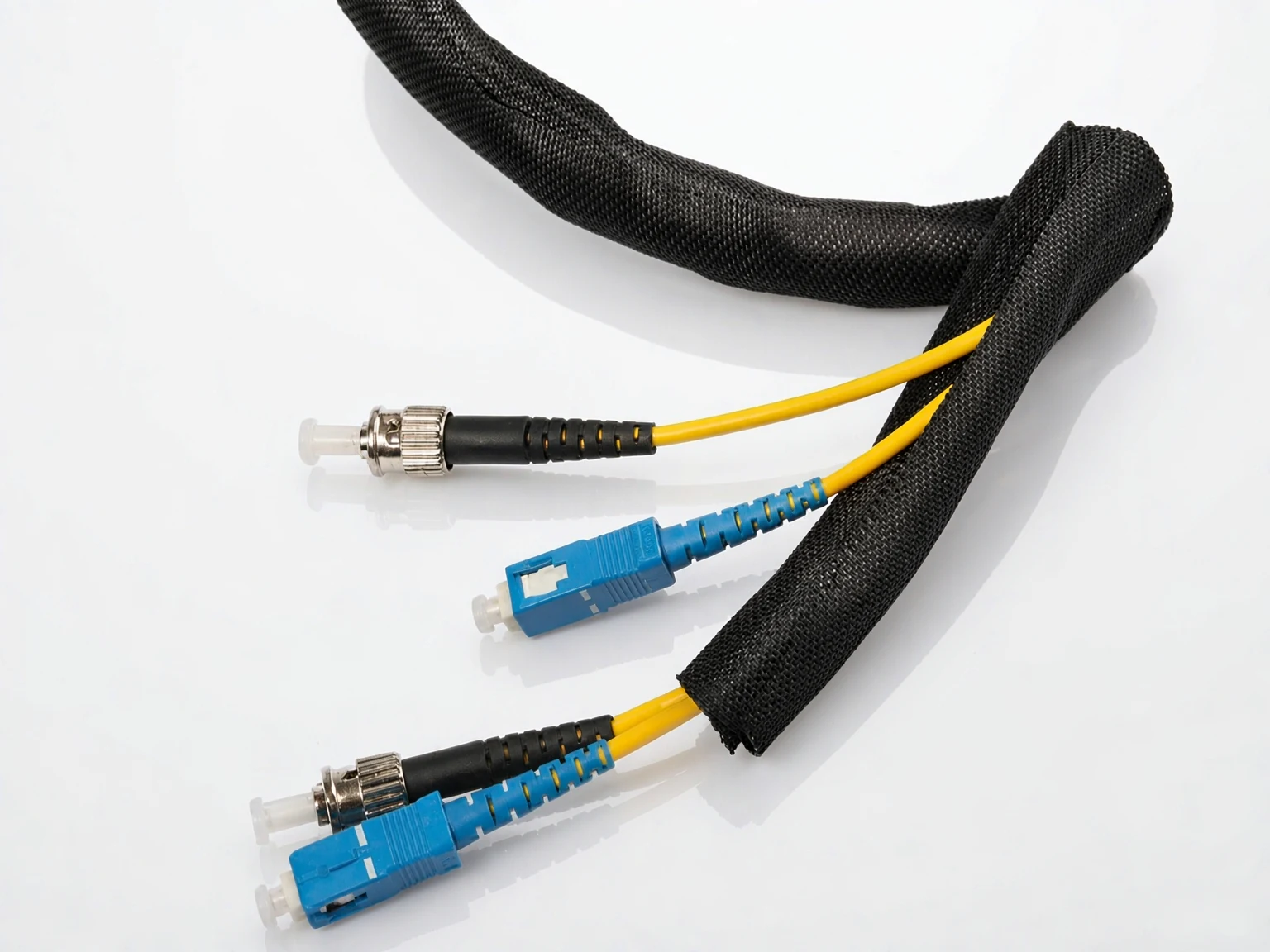
Longitudinally self-closing sleeving that wraps around an existing harness without disconnecting wires or removing terminals. Used for branch harnesses, retrofit work, service sections and any routing that needs to be reopened. Available in PET braid, textile and two-layer constructions.

No disconnectionReopenableFlat width to 200 mm155 °C continuous
PET 自卷式编织套管(免拆线包覆)
PET 自卷式编织套管(免拆线包覆)

Product structures

Two materials, one self-closing logic

PET self-wrapping braid

PET self-wrapping braid

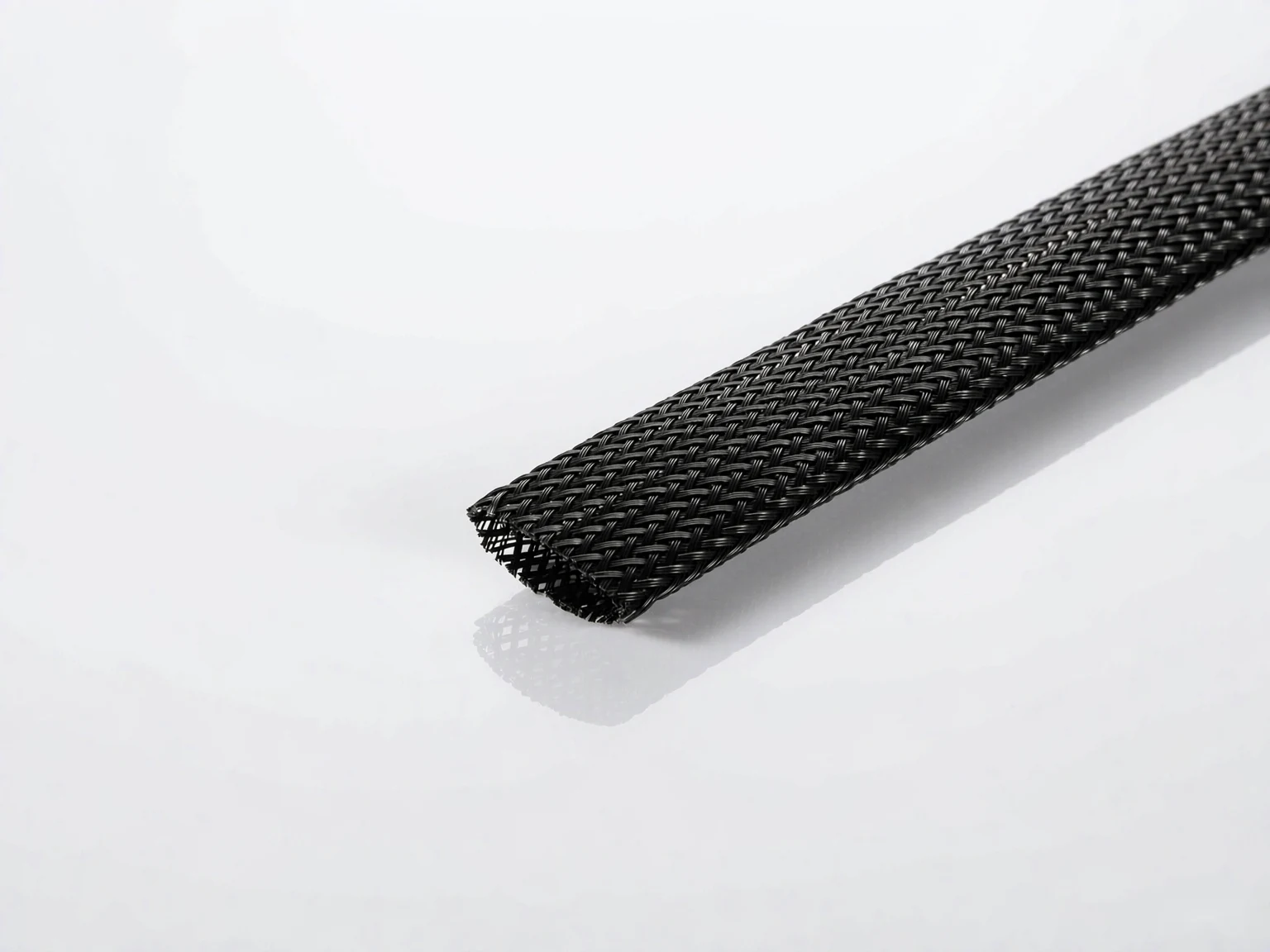
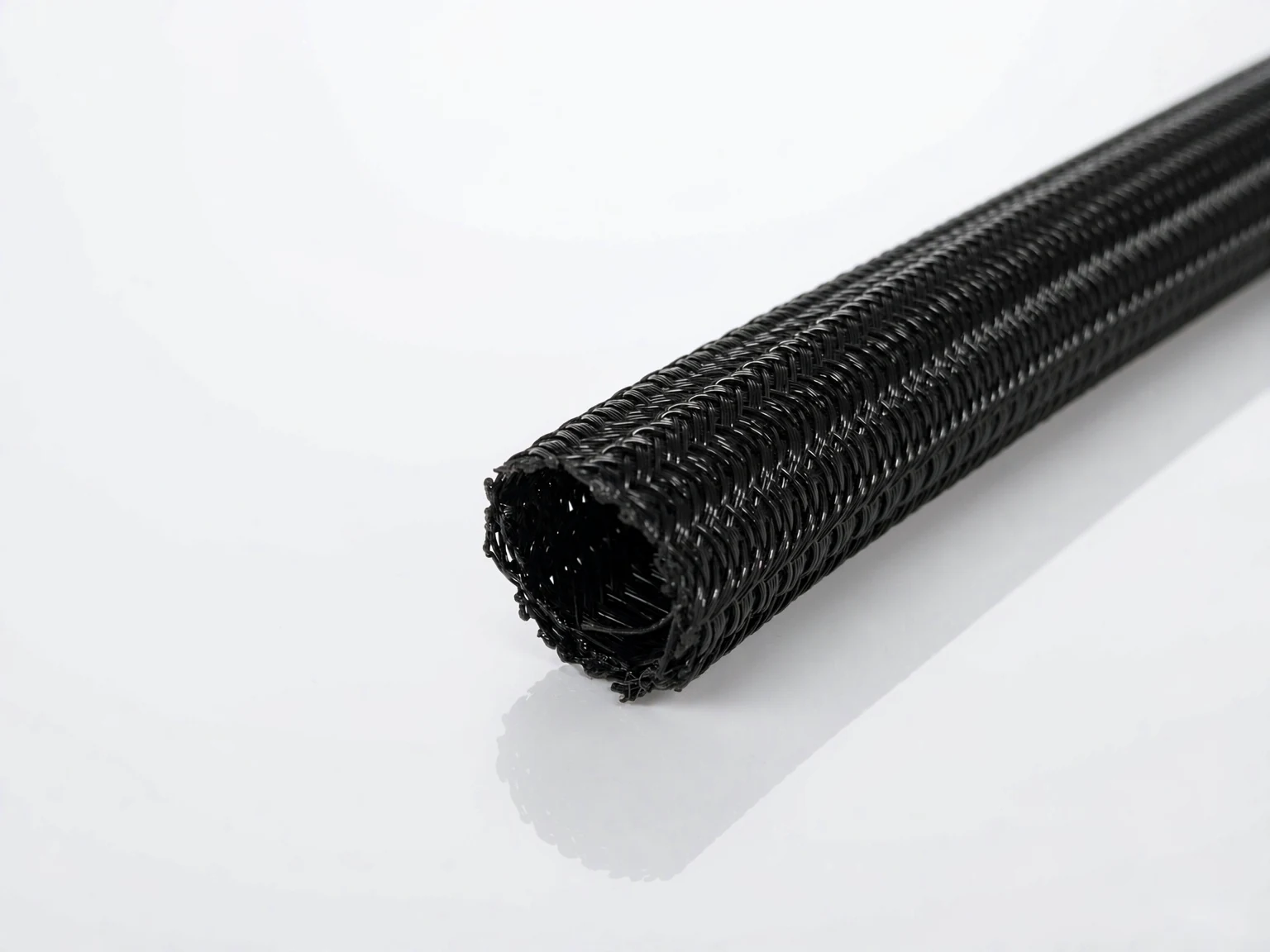
Polyester monofilament braid formed into a longitudinal self-closing profile. Braided texture, abrasion resistant, light, good heat dissipation; hot-cut edges prevent fraying. Used for engine-bay-external harnesses, internal routing and control cabinets.

Textile self-wrapping sleeve

Textile self-wrapping sleeve

Softer hand, better conformity when closed; for visible areas requiring good appearance and for positions where wire insulation needs protection. Abrasion resistance is lower than PET braid.

Two-layer construction

Two-layer construction

Abrasion-resistant braid outside with a soft liner inside, for positions that need both — through sheet-metal holes, near bracket edges.

Selection

Six points to confirm before quoting

The published figure is the flat (unrolled) width, not the bundle diameter. Confirm all six points and the specification is usually settled in one pass.

Bundle rangeMinimum and maximum diameter
Flat widthUnrolled width (10–200 mm typical)
MaterialPET braid / textile / two-layer
TemperatureContinuous and peak (PET −50 to 155 °C)
Flame ratingUL94 V-0 or OEM standard
EnvironmentOil, outdoor, repeated opening

Width vs bundle diameter

Covered bundle diameter by flat width

Formula: flat width ≈ π × bundle diameter ÷ (1 − overlap); covered diameter ≈ width × (1 − overlap) ÷ π.

Flat width (mm)0% overlap30% overlap50% overlap
10approx. 3.1 mmapprox. 2.2 mmapprox. 1.5 mm
20approx. 6.3 mmapprox. 4.4 mmapprox. 3.1 mm
25approx. 7.9 mmapprox. 5.5 mmapprox. 3.9 mm
38approx. 12.0 mmapprox. 8.4 mmapprox. 6.0 mm
50approx. 15.9 mmapprox. 11.1 mmapprox. 7.9 mm
75approx. 23.8 mmapprox. 16.7 mmapprox. 11.9 mm
100approx. 31.8 mmapprox. 22.2 mmapprox. 15.9 mm
150approx. 47.7 mmapprox. 33.4 mmapprox. 23.8 mm
200approx. 63.6 mmapprox. 44.5 mmapprox. 31.8 mm

A 25–50% overlap is needed for stable coverage; use 50% where vibration is present.

State whether the bundle diameter given is the tight or the natural maximum — the two can differ by more than 20% on a real harness.

Trade-off

Self-wrapping vs closed sleeve

Installation: self-wrapping closes laterally, no disconnection; closed (push-through) must be threaded from the harness end. Stage: self-wrapping for retrofit, service and branch additions; closed for new builds and volume production.

Efficiency and coverage: self-wrapping is fast at a single point but slower on long straight runs; coverage depends on overlap and the seam remains an opening. Using both on one machine is normal.

Installation pitfalls

Four that appear on the assembly line

Treating flat width as bundle size

Usable bundle diameter is roughly one third of the width with no overlap, and closer to one quarter at 30% overlap. A 10 mm sleeve does not cover a 10 mm bundle.

No overlap at the seam

Closing just enough to meet leaves the seam open under vibration. Start at 25%, use 50% where vibration is present.

Cutting with scissors

PET braid must be hot-cut; otherwise the edge frays continuously and the sleeve works loose.

Using PET in oil contact or above 155 °C

PET swells in long-term oil contact and loses strength; switch to a fibreglass construction near heat sources.

FAQ

Common purchasing questions

Self-wrapping or standard braided sleeving?

If the harness can be threaded from the end, use closed braided sleeving for efficiency and consistent coverage. If it is already installed, cannot be disconnected, or needs periodic inspection, use self-wrapping.

How do I calculate the width I need?

Measure the bundle diameter, estimate the circumference (π × diameter) and divide by (1 − overlap). A 20 mm bundle at 30% overlap needs roughly 90 mm flat width.

Can it be reopened repeatedly?

The construction allows it, but each cycle loads the braid edge. For frequently serviced positions choose hot-cut, reinforced edges and secure both ends with ties after service.

Can you supply flame rating, RoHS and REACH documents?

Yes, per structure. Flame performance depends on yarn and braid density, so it is verified against the selected specification rather than the series.

RFQ

Request a quotation

Send all eight points for a specific specification:

  • Construction: PET self-wrapping / textile / two-layer
  • Minimum and maximum bundle diameter (mm):
  • Flat width required (mm):
  • Continuous and peak temperature:
  • Flame rating required:
  • Environment (oil / outdoor / repeated opening):
  • Cut length and quantity:
  • Sample quantity and annual volume:

Samples and selection

Send the bundle diameter, get a width recommendation

Include minimum and maximum bundle diameter, environment, temperature and flame rating, cut length and expected volume.