
Electrical requirement
Define operating voltage, transient conditions, dielectric withstand expectation and the system standard. A nominal rating should be evaluated in the actual assembly.
ENGINEERING BUYER GUIDE
Voltage is only one part of electrical sleeving selection. For motor leads, transformer wires and high-temperature harnesses, define the insulation requirement together with temperature, size, wall build, bending, environment and the validation route before approving a construction.
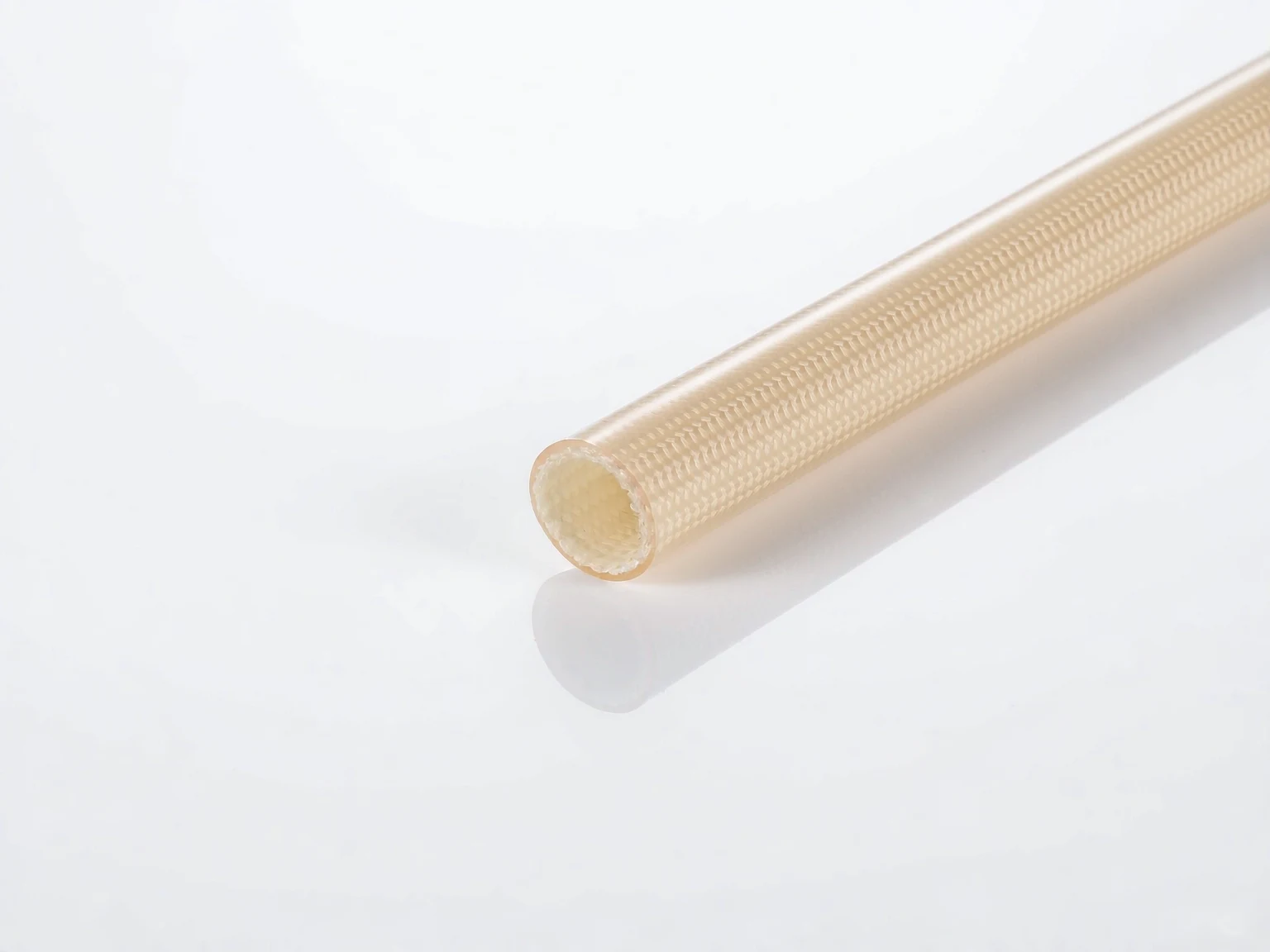
SELECTION PRINCIPLE
Define operating voltage, transient conditions, dielectric withstand expectation and the system standard. A nominal rating should be evaluated in the actual assembly.
Record continuous temperature, peak temperature and duration. Conductor self-heating, local hot spots and thermal cycling may be more important than ambient temperature.
Confirm conductor diameter, required clearance, wall build, bend radius, abrasion exposure, cut length and installation method before final sizing.
TYPICAL 600V USE
Standard 600V fiberglass sleeving constructions are commonly considered for transformer leads, motor winding connections, lighting assemblies and electrical harness routing. Final application suitability depends on the complete material construction and the end-use test program.
Silicone resin, silicone rubber and acrylic-coated fiberglass sleeving may serve different temperature, flexibility and installation needs. Compare the requested dimensions, coating system and performance documents before choosing a replacement or production grade.
RFQ CHECKLIST
RELATED RESOURCES
Review continuous versus peak temperature, coating chemistry and thermal-aging conditions before material selection.
Read the temperature rating guideCompare selection factors for automotive harnesses, transformers, motors and liquid-cooling projects.
View industry solutionsENGINEERING SUPPORT
Include voltage, temperature, conductor size, target application, approval requirement and estimated demand. WCW can recommend a suitable construction, sample direction and available technical files.